
How To Recover Compensation After A Catastrophic Injury
Key Takeaways
- Catastrophic injuries can create immediate medical needs and long-term financial consequences.
- Strong documentation helps show how an injury has affected health, income, independence, and family life.
- Compensation may involve current bills, future care, lost earning capacity, home modifications, and other losses.
- Insurance offers and releases should be carefully reviewed before acceptance or signature.
- Recovery is often easier to manage when families organize medical, financial, and legal information early.
Table Of Contents
- The First Days After a Serious Injury
- How Daily Life May Change
- Building a Reliable Care Team
- What to Expect From Rehabilitation
- Making a Home Safer and More Accessible
- Calculating Medical Costs and Lost Income
- Protecting Caregiver Health
- Keeping Records That Tell the Full Story
- Questions to Ask Before Insurance or Legal Decisions
- Common Questions Families Ask
A catastrophic injury can reshape nearly every part of a person’s life. A spinal cord injury, traumatic brain injury, severe burn, amputation, or other life-altering condition may require extensive treatment, rehabilitation, adaptive equipment, and assistance with daily tasks. When another party may be responsible, speaking with an experienced catastrophic injury attorney can help an injured person or family understand the options for pursuing compensation.
Financial recovery cannot undo the harm, but it can help pay for care and protect a family from carrying the costs resulting from someone else’s conduct. The process requires patience, evidence, and a realistic view of both current expenses and future needs. Taking organized steps early can make it easier to protect an injury claim while keeping attention on medical recovery.
The First Days After a Serious Injury
The first days after a catastrophic injury are often overwhelming. Family members may be asked to make decisions while trying to understand diagnoses, procedures, discharge plans, and insurance calls. Assigning simple roles can reduce confusion. One person can take notes during appointments, another can manage medications, and another can update relatives or track insurance communications.
Ask medical providers to explain unfamiliar terms in plain language. Important questions include: What care is needed now? What warning signs require urgent attention? Which specialists will be involved? What must happen before discharge? Medical emergencies and treatment decisions should always be handled with qualified health professionals.
How Daily Life May Change
A serious injury may affect mobility, memory, speech, sleep, personal care, work, school, and relationships. Recovery is rarely a straight line. Someone who once handled driving, meals, child care, and household tasks independently may now need transportation, medication reminders, help bathing, or supervision during daily activities.
Areas That May Need New Plans
- Personal care, mobility, and fall prevention
- Transportation to medical and therapy appointments
- Child care, household work, and meal preparation
- Employment, school, job training, or modified duties
- Communication needs and emotional well-being
Building a Reliable Care Team
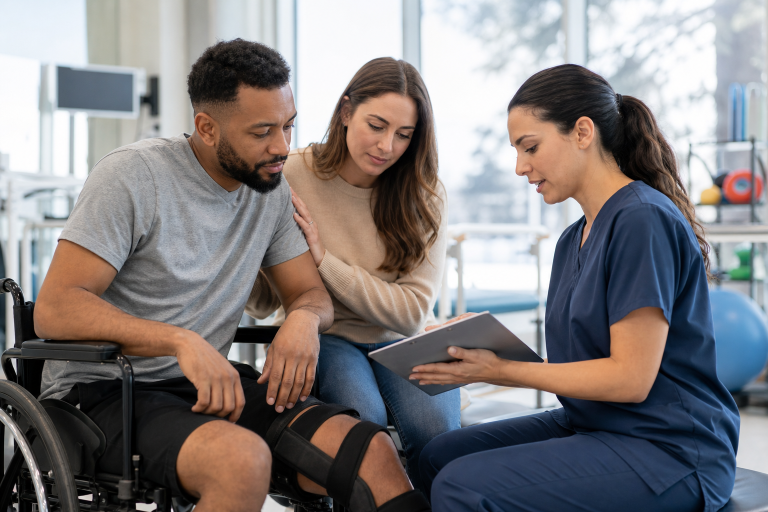
Catastrophic injuries often require coordinated care from physicians, nurses, physical therapists, occupational therapists, speech therapists, social workers, case managers, and mental health professionals. Keep one current list of providers, phone numbers, medications, appointments, and treatment instructions. Bring written questions to each visit and ask who is responsible for follow-up care after discharge.
Families coping with brain injuries may also benefit from the CDC’s traumatic brain injury support resources, which identify organizations and services that can assist injured people, caregivers, and loved ones during recovery.
What to Expect From Rehabilitation
Acute treatment focuses on stabilizing the patient and addressing urgent medical problems. Rehabilitation focuses on function, independence, and preparation for daily life. Goals may include improving balance and strength, relearning speech or swallowing skills, practicing safe transfers, using mobility equipment, or preparing for a return to work or school. Progress depends on the injury, overall health, treatment plan, and support available, so no one should promise a specific outcome or timeline.
Making a Home Safer and More Accessible
Returning home may require practical changes. Common adjustments include grab bars, brighter lighting, removal of loose rugs, open space for wheelchairs or walkers, lower storage areas, ramps, lifts, and wider doorways. Before making expensive changes, ask an occupational therapist or rehabilitation professional to assess the home. The right modifications depend on the person’s abilities, equipment, and expected long-term care needs.
Calculating Medical Costs and Lost Income
Compensation should account for more than emergency treatment. A catastrophic injury can generate hospital bills, surgeries, medications, therapy, medical transportation, equipment costs, home modifications, paid caregiving, and future treatment expenses. It may also prevent a person from returning to the same job, reducing future earning capacity.
Financial Records to Keep
- Medical bills, explanation of benefits forms, and pharmacy receipts
- Travel and lodging costs connected to treatment
- Invoices for home modifications and adaptive equipment
- Pay stubs, tax records, and documentation of missed work
- Records of paid care and the time family members spend providing assistance
A long-term care plan may be useful when future medical, therapy, equipment, and personal care needs are anticipated. Care needs can change over time, which is why a settlement figure should be evaluated against the full expected impact of the injury, not only bills already received.
Protecting Caregiver Health
Family caregivers often become advocates, drivers, schedulers, and hands-on helpers while managing their own work and household responsibilities. This can lead to exhaustion, physical strain, isolation, and poor sleep. Create a weekly task list, give helpers specific responsibilities, use a shared calendar, and ask providers about respite services or support groups. Research on long-term rehabilitation also recognizes the substantial emotional and practical burden that serious brain injuries can place on families and caregivers.
Keeping Records That Tell the Full Story
Organized records can support medical planning and help explain the real impact of an injury. Maintain a secure digital and paper file containing diagnoses, treatment dates, therapy reports, medication lists, work restrictions, photographs, witness information, insurance correspondence, and receipts. A daily journal can be especially valuable for recording pain levels, mobility limits, missed activities, sleep problems, and the help required each day.
Questions to Ask Before Insurance or Legal Decisions
Insurance companies may seek statements, medical authorizations, or a quick settlement before the full extent of an injury is known. Before accepting an offer or signing a release, ask what losses are included, whether future care has been considered, what evidence should be preserved, and whether signing ends the right to seek additional compensation. Filing deadlines, insurance rules, and available claims vary by state and case type, so individualized legal advice is important.
Common Questions Families Ask
How Long Does Recovery Take?
Recovery depends on the type and severity of injury, health history, treatment, and rehabilitation goals. Some improvements happen quickly, while others take months or longer.
What if the Injured Person Cannot Return to Work?
Document work restrictions and explore modified work, vocational rehabilitation, retraining, disability benefits, and the effect of reduced earning capacity.
When Should a Family Ask for More Help?
Additional help may be needed when care exceeds the family’s skills, safety becomes a concern, or caregivers cannot maintain their own health, sleep, or employment.
Moving Forward One Step at a Time
Recovering compensation after a catastrophic injury requires careful planning alongside medical care. Families do not need to solve every issue at once. By building a care team, tracking costs and limitations, protecting important records, and carefully reviewing insurance decisions, injured people can take practical steps toward a safer and more financially stable future.