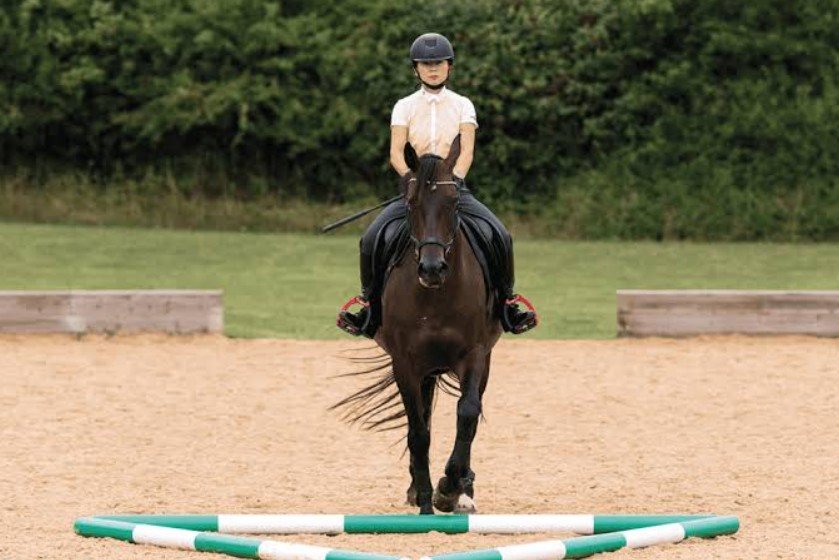
How Pole Work Can Sharpen Rhythm, Balance, And Confidence In Everyday Horse Training In 2026
Key Takeaways
- Pole work can develop rhythm, balance, coordination, and rider timing.
- One well-placed pole can be as useful as a complicated pattern.
- Spacing, height, footing, and fitness should guide every setup.
- Begin at the walk, then progress only when the horse stays relaxed and organized.
- Use raised poles to add awareness, not to force a bigger effort.
- Stop and reassess if the horse becomes tense, uneven, sore, or fatigued.
Pole work remains one of the most practical ways to improve everyday riding because it gives both horse and rider a clear, manageable task. A few poles can reveal whether the rhythm is steady, the line is straight, and the rider is supporting rather than interfering. For riders seeking sturdy adjustable equipment, horse jump cavaletti from Old Dominion Horse Jump Company provide a purpose-built option for pole exercises. Based in Washington, Virginia, the company builds wooden horse jumps and training equipment, including solid-wood cavaletti that can be rolled to different heights for flatwork, jumping preparation, and conditioning.
The value of pole work is not limited to one discipline. Dressage riders can use it to refine tempo and straightness, jumpers can prepare for more organized approaches, and trail or pleasure riders can build careful foot placement and confidence. The best sessions are usually short, calm, and tailored to the horse in front of you.
Why Pole Work Works
Poles give the horse a question that is easy to understand: notice the ground, organize each step, and continue forward without rushing. The rider has an equally important job. Keep a quiet upper body, maintain an even connection, and allow the horse enough freedom to assess the obstacle. That combination makes pole work useful for exposing crookedness, loss of balance, inconsistent tempo, or unclear aids.
It also adds variety without requiring a major change to a regular schooling plan. A useful cavaletti training guide from Dressage Today highlights how ground poles and raised exercises can support rhythm, balance, gait quality, and attentive movement. The principle applies across disciplines: start simply, preserve the horse’s confidence, and make the exercise fit the intended goal.
Skills Pole Work Can Build
- Rhythm: Evenly spaced poles encourage a consistent tempo before, through, and after the line.
- Balance: The horse must organize weight through the body rather than lean heavily onto the forehand.
- Coordination: Repeated careful steps encourage greater awareness of where each foot lands.
- Rider timing: The rider learns when to prepare, soften, and avoid making last-second corrections.
- Strength: Controlled work can ask the horse to use the back and hindquarters more thoughtfully.
- Confidence: Predictable, low-pressure repetitions can help hesitant horses approach new tasks with less worry.
These benefits are developed over time, not in one ride. A horse’s stride length, conformation, fitness, shoeing, footing, and previous experience all affect the response to poles.
How To Choose The Right Setup
Match the setup to the horse’s current ability, not the most advanced pattern seen online. A green horse may benefit from walking quietly over one pole. A fit, experienced horse may handle a short trot line, a wide fan, or a low raised pattern. Measure and adjust spacing for the individual horse rather than assuming one distance works for every gait and every mount.
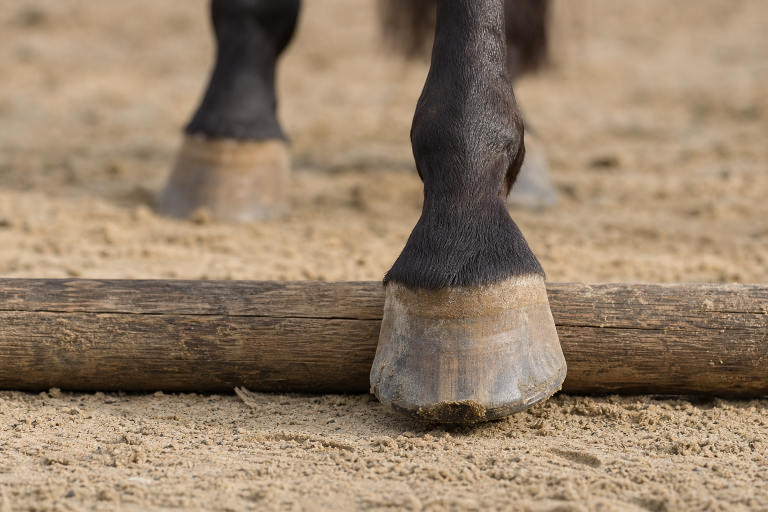
Consider These Factors
- The horse’s age, fitness level, soundness, and past pole experience.
- The rider’s ability to maintain balance and a consistent line.
- The footing, arena dimensions, and room for a safe approach and exit.
- The purpose of the session is relaxation, strength, rhythm, or jump preparation.
- Whether poles are on the ground, slightly raised, or supported in a fixed cavaletti design.
A Step-By-Step Pole Work Plan
- Warm up without poles: Walk on a loose, purposeful contact, then add large turns and simple transitions.
- Walk over one pole: Approach straight, keep the pace unhurried, and allow the horse to look down.
- Add poles gradually: Build a short line only after the first pole is comfortable and uneventful.
- Try the trot: Prioritize tempo over speed. If the horse rushes, return to walk or use fewer poles.
- Change one feature: Introduce a gentle curve, fan, or transition near a pole, but not all at once.
- Add low elevation: Raise a pole only after ground-pole work is consistently quiet and balanced.
- Finish easily: End with relaxed walking and reward the horse for a calm effort.
Useful Exercises For Everyday Training
Single Pole Check-In
Place one pole on the long side and ride over it at walk and trot. This simple exercise can show whether the horse drifts, rushes, falls in, or loses attention. It is also an excellent reset between more demanding flatwork exercises.
Four-Pole Straight Line
Set four poles in a straight line, beginning at the walk. Once the horse maintains an even tempo and centered approach, try the trot. Keep the goal modest: a quiet entry, regular steps, and a straight exit.
Curved Pole Path
Arrange several poles along a broad curve. The horse must bend through the body while watching foot placement, making this exercise useful for horses that lean, drift through a shoulder, or rush turns.
Walk-Trot Transition Near A Pole
Ride a walk-to-trot transition several strides before a single pole, then return to walk afterward. The rider must prepare early instead of accelerating at the last moment, while the horse learns to stay attentive through transitions.
Low Raised Pole
Raise one end of a pole only after the horse is comfortable with ground poles. Keep the elevation modest and the approach uncomplicated. The purpose is better body awareness, not a dramatic jump or a tiring repetition.
Common Mistakes To Avoid
- Adding too many poles before the horse understands the first question.
- Using identical spacing for every horse, gait, and day of training.
- Riding faster in an attempt to get through the exercise.
- Looking down continuously and allowing the upper body to tip forward.
- Repeating a difficult pattern after the horse becomes worried or frustrated.
- Changing height, speed, direction, and spacing in the same session.
- Ignoring fatigue, soreness, tripping, or uneven movement.
Pole Work Safety Checklist
- Inspect poles, blocks, standards, and supports for cracks, instability, or sharp edges.
- Check footing for holes, slippery areas, deep spots, and loose debris.
- Leave enough space to approach, exit, circle, or quietly discontinue the exercise.
- Wear a properly fitted helmet and suitable riding footwear.
- Introduce unfamiliar equipment from the ground if the horse needs time to inspect it.
- Keep early attempts slow, simple, and free from pressure.
Pole work is not a substitute for veterinary assessment, farrier care, saddle fit evaluation, or a sound conditioning program. Stop the session if the horse shows pain, fear, unusual stiffness, or repeated loss of coordination.
When To Make The Exercise Easier Or Harder
Progress when the horse approaches straight, maintains an even tempo, breathes calmly, and responds consistently to the rider’s aids. Make only one change at a time, such as adding one pole, slightly adjusting spacing, or raising one end. Successful repetitions should feel ordinary rather than heroic.
Step back when the horse rushes, stops, repeatedly taps poles, swings the hindquarters, becomes tense, or loses rhythm. Fewer poles, more space, a slower gait, or a rest day may be the most productive answer.
Final Thoughts
Pole work does not need to be complicated to be effective. A few thoughtfully placed poles can build useful awareness of rhythm, balance, straightness, and attention. Keep the questions clear, the setup safe, and the progression small. When the difficulty matches the horse’s experience, and the rider remains patient, this simple training tool can support better everyday work in nearly any program.